
The Stay-at-Home-Partner system as the default
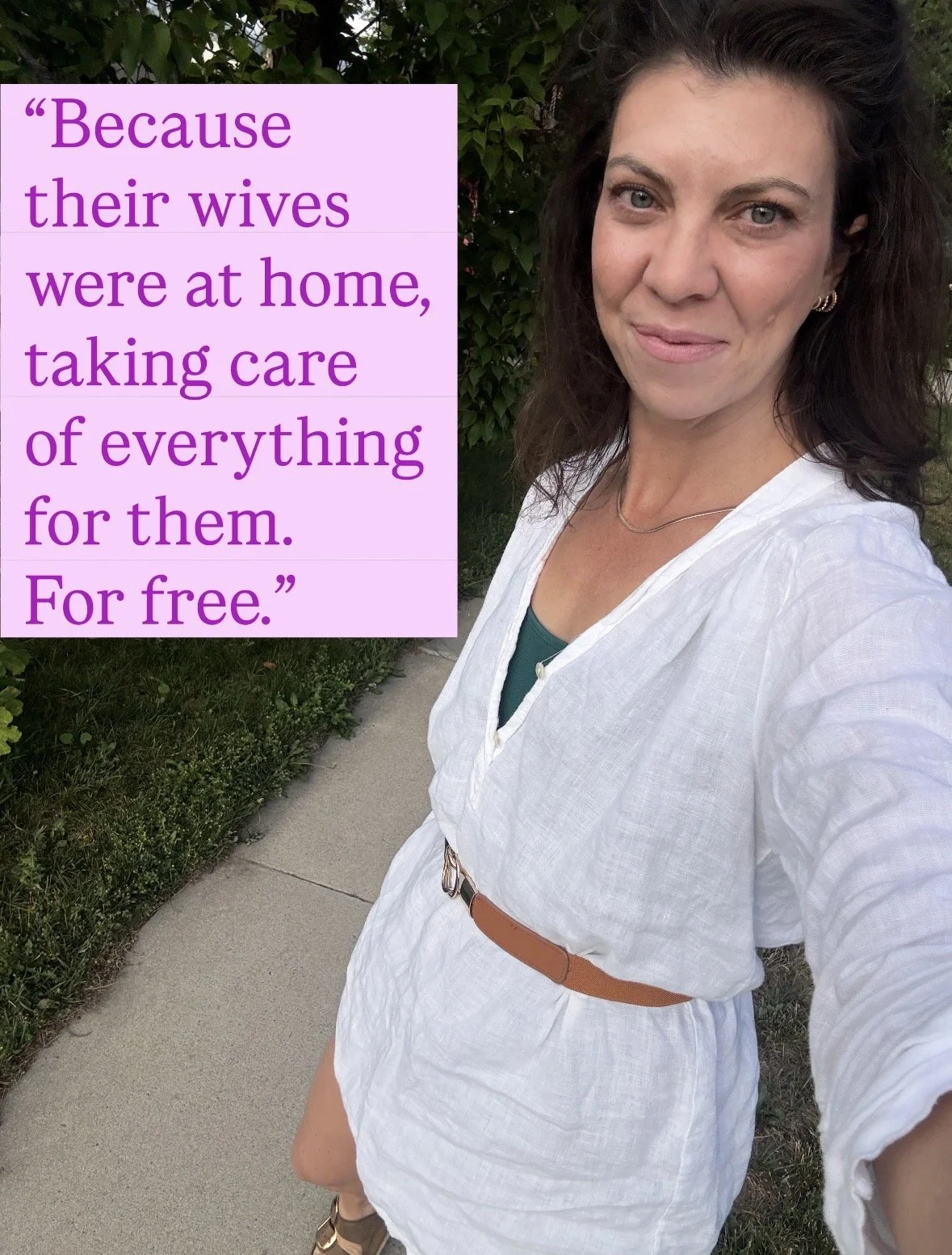
"Because their wives were at home, taking care of everything for them. For free."
I love the messages I've received about this—the grateful and encouraging ones, as well as the thoughtful, prodding ones. Thank you. I'm looking forward to diving in deeper with you, particularly around two specific questions that have come up repeatedly, which seem to represent the two different perspectives coming to this discussion:
On the one hand are those who have lived the life of a corporate professional without the benefit a stay-at-home-partner. They ask:
1. Did you SAY that to him?
They want to know if I shared the impact of policies like this (and others that unnecessarily create difficulties for this group, like hosting mandatory in-person meetings that begin before school drop-off), and if leadership showed any empathy, or interest in addressing it.
The answers are yes, yes, and no.
Yes, I said this directly, and shared the impact. Yes, they showed empathy—or at least understanding. But no, they did not show interest in addressing it. In fact, they were perceived to be doubling down on the policy as a means of reinforcing the stay-at-home-partner system as the preferred choice.
Which brings me to the question coming from the other side—from those who see the benefits of that system (to themselves and society as a whole), and while they express sympathy for those outside of it, they aren’t sure they see what’s wrong with keeping it as the default system, and given it preferential status at work. This group has asked me:
2. How does this system leave women “extremely vulnerable”?
I genuinely love that I’m getting this question. For one thing, it means I’m reaching beyond my own echo chamber, which means having my thoughts challenged, and all the refinement that comes from considering things from multiple perspectives.
And it also means people are open to questioning something they see as a beautiful, natural, God-given framework for society: Women, as the literal creators and nurturers of life, should get to spend their time caring for the children, while the men go out and work to provide for all of them.
They see this system as a way of relieving women’s vulnerability.
And in many cases, they are right. Many of us have models to point to where this plays out perfectly: the dad provides sufficient resources for the mom to take care of their children and herself comfortably while he’s gone, they both enjoy their roles, the division of labor is fair, and money, decision-making, and leisure time are shared equitably.
I can see why it’s something worth striving for—for many people.
But it isn’t everyone’s ideal, it isn’t available to everyone, and the consequences of setting up society to give preferential treatment to this system are drastic and dire.
And because they impact children, they impact all of us.
That’s the subject for my next post. In the meantime, I do love hearing from you! I ask that any public comments you leave are written with compassion and kind intent toward those on “the other side,” whichever that happens to be.
Disclaimer: As always when writing about my experiences at work, I’m sharing my experience, and how I remember it.